
What is snow mould and how do I fix it?
Snow mould is a fungus that grows on grass under long snow cover. It shows up as grey or pink matted patches as the snow melts. Rake the patches lightly so the grass can dry. Most lawns recover once they start growing. Patches that stay brown can be reseeded.
Fall cleanups from $250. Leaves cleared from the lawn, garden beds and walks, bagged and left at the curb.
What it looks like
Round patches of matted, straw-coloured grass appear as the snow melts. There are two kinds of snow mould.
A white to grey fuzz of fungus often rings the patches near melting snow. It fades as the grass dries.
Grey snow mould
- Fungus: Typhula species
- Patch size: a few inches to several feet across. Patches often join up
- Colour: grey, tan or silver-white
- Up close: tiny brown or black specks in the dead blades
- Needs snow: yes. Long snow cover on unfrozen ground
- Damage: rarely kills the grass
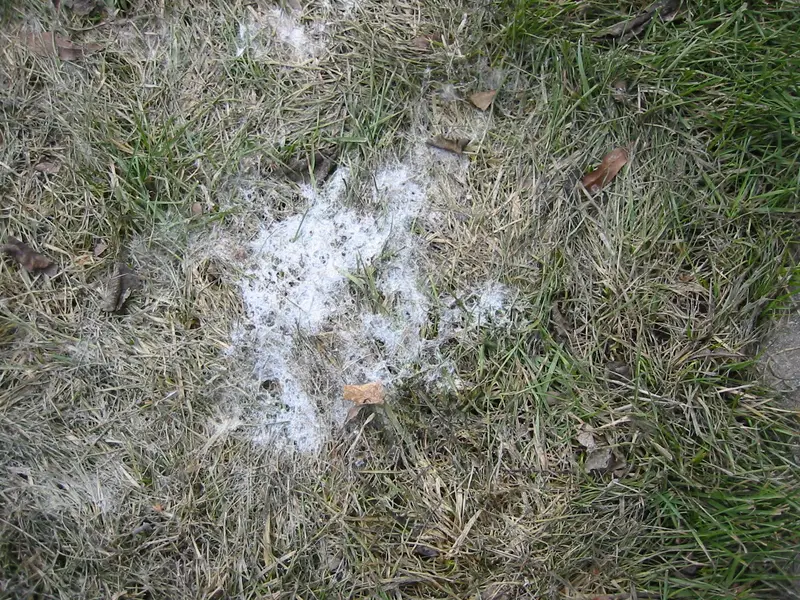
Penn State Extension describes grey snow mould in detail.
Pink snow mould
- Fungus: Microdochium nivale
- Patch size: usually 2 to 10 inches across. Patches can join up
- Colour: pink, white or tan, with a pink or copper ring at the edge
- Up close: no specks
- Needs snow: no. It also grows in cool, wet weather without snow
- Damage: a severe case kills the grass
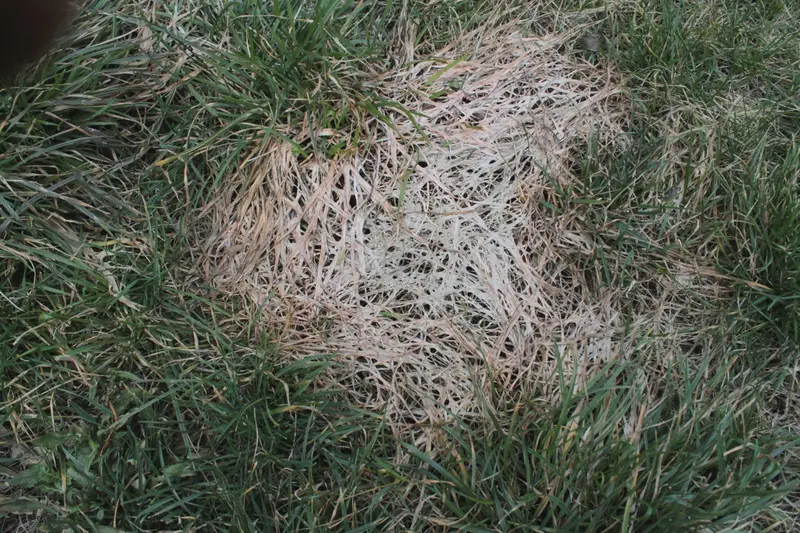
Penn State Extension describes pink snow mould in detail.
Why it happens
Both fungi grow best just above freezing, between about 0 and 7°C. Snow on unfrozen ground keeps the grass just above freezing. The deeper the snow and the longer it stays, the worse the damage. The University of Wisconsin says grey snow mould needs more than 60 days of snow on unfrozen ground. It rarely develops if the ground freezes before the first snow.
What raises the risk on your lawn:
- Long grass going into the winter
- Leaves left on the lawn over the winter
- A heavy dose of fast-release nitrogen fertilizer late in the fall. It pushes soft new growth that the fungus infects easily
- Snow from the driveway and walks piled on the lawn. Those piles are the last snow to melt
What to do in spring
- Wait until the snow is gone and the soil is no longer soggy.
- Rake the patches lightly with a leaf rake. Break up the crusted, matted blades so the grass can dry and start growing.
- Give it time. Most lawns recover once the weather warms and the grass starts growing.
- Feed lightly once the grass is growing. It helps the damaged patches fill in.
- Reseed any patches that are still brown when the rest of the lawn has greened up. That grass is dead. Overseeding fills those patches with new grass.
The steps are from Cornell Cooperative Extension and the University of Wisconsin.
Can I spray it?
Ontario bans the cosmetic use of pesticides on lawns. Fungicides are pesticides. Only products with an active ingredient on the province’s Allowable List can be used on a lawn. The rules are on Ontario’s page Using pesticides in Ontario.
A spray is rarely needed. Cornell’s extension service says fungicides are usually not warranted for snow mould on home lawns.
How to prevent it in the fall
You cannot control how long the snow stays. You can lower the risk.
| Why | |
|---|---|
| Keep mowing until the grass stops growing | Long grass mats down under the snow. See when to stop cutting grass |
| Clear the leaves before the snow | A mat of wet leaves under the snow raises the risk of snow mould |
| Feed with a slow-release fertilizer in the fall | A heavy dose of fast-release nitrogen pushes soft growth. The fungus infects it easily |
| Pile snow away from the lawn | Snowbanks on the lawn stay long after the rest of the snow has melted |
The advice is from Penn State Extension and the University of Wisconsin.
We can take care of it
Our spring cleanup rakes and lifts matted grass and clears winter debris from the lawn. Patches that stay brown can be overseeded. In the fall, our fall cleanup clears the leaves off the lawn before the snow.
More guides
Tell us what you need.
Send us your Ottawa address and what you would like done. We will get in touch the same business day.